Windows 12 Leaks Reveal Microsoft’s Most Ambitious Operating System Yet
The technology world is buzzing with excitement as leaked information about Microsoft’s upcoming Windows 12 operating system continues to surface across various channels. These leaks paint a picture of what could be Microsoft’s most ambitious and transformative operating system update in over a decade, featuring deep artificial intelligence integration, a completely redesigned user interface, and performance optimizations that promise to revolutionize how we interact with our personal computers.
The Origins of Windows 12 Leak Information
The first significant leaks about Windows 12 emerged from multiple sources, including internal Microsoft documentation that surfaced online, reports from developers with access to early preview builds, and information shared by supply chain partners who have been briefed on the new hardware requirements. These leaks have been corroborated by multiple independent sources, lending credibility to the information despite Microsoft’s official silence on the matter.
Industry analysts have noted that the timing of these leaks appears strategic, possibly serving as a soft introduction to prepare the market for what will be a significant departure from traditional Windows design philosophies. The leaks suggest that Microsoft has been developing Windows 12 under the internal codename “Hudson Valley,” a reference that has appeared in various internal communications and code repositories.
The development timeline, according to these leaks, indicates that Microsoft began serious work on Windows 12 shortly after the release of Windows 11, with the company assembling its largest Windows development team in history to tackle the ambitious project. Reports suggest that over 5,000 engineers have been directly involved in various aspects of Windows 12 development.
Artificial Intelligence at the Core
Perhaps the most significant revelation from the Windows 12 leaks is the unprecedented level of artificial intelligence integration planned for the operating system. Unlike Windows 11, where AI features were added as supplementary capabilities, Windows 12 appears to be designed from the ground up with AI as a fundamental component of the user experience.
The leaked information describes a feature called “Windows Intelligence,” which goes far beyond the current Copilot implementation. This new AI system reportedly runs locally on the device using a dedicated neural processing pipeline, enabling AI features to function without constant internet connectivity. The system is designed to learn user behavior patterns, anticipate needs, and automate routine tasks without explicit commands.
According to the leaks, Windows Intelligence will feature contextual awareness that understands what the user is working on across all applications. For example, if a user is researching a topic in their browser, the AI can automatically organize relevant files, suggest related documents, and prepare presentation templates based on the gathered information. This level of integration represents a paradigm shift in how operating systems interact with users.
The AI capabilities extend to system management as well. Windows 12 reportedly includes an intelligent resource manager that uses machine learning to optimize CPU, memory, and storage allocation based on predicted user behavior. The system learns which applications will be needed at specific times and pre-loads them accordingly, potentially eliminating application launch delays entirely.
Revolutionary User Interface Design
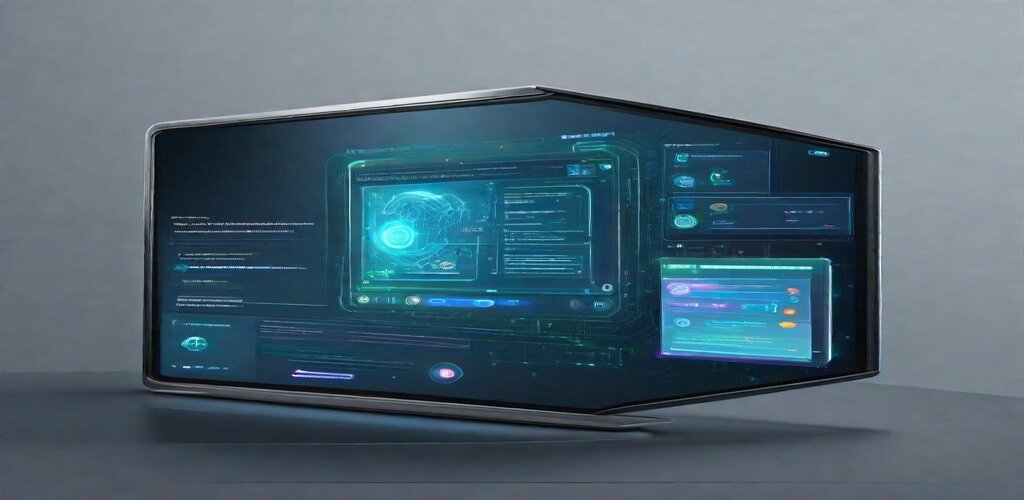
The leaked screenshots and design documents reveal a dramatically different visual approach for Windows 12. The new interface, internally referred to as “CoreUX,” represents Microsoft’s most significant visual overhaul since the transition from Windows 7 to Windows 8, though reportedly executed with far more user-centric design principles.
The taskbar has been completely reimagined in these leaks, featuring a modular design that adapts to user context. When working on productivity tasks, the taskbar expands to show relevant tools and quick actions. When consuming media, it minimizes to a subtle presence that doesn’t distract from content. This dynamic behavior is managed by the AI system, which learns user preferences over time.
Window management receives substantial improvements according to the leaked information. A new feature called “Scenes” allows users to save complete desktop configurations, including window positions, application states, and even specific file locations. Users can switch between Scenes instantly, transforming their computer from a work environment to a creative studio to an entertainment center with a single click.
The Start menu undergoes yet another transformation in Windows 12. Leaked designs show a more expansive interface that combines traditional application launching with AI-powered recommendations, recent file access, and contextual suggestions. The menu reportedly adapts its layout based on time of day and detected user patterns, showing work applications during business hours and entertainment options in the evening.
Performance and Hardware Requirements
The Windows 12 leaks have generated significant discussion about hardware requirements, with early information suggesting that Microsoft is setting a higher bar for the new operating system. However, the performance benefits reportedly justify these requirements, with leaked benchmarks showing substantial improvements over Windows 11.
According to leaked documentation, Windows 12 features a completely rewritten kernel component called “CoreOS,” which eliminates decades of legacy code that has accumulated in Windows. This modernization reportedly results in boot times under five seconds on compatible hardware, reduced memory footprint for system processes, and improved battery life on mobile devices.
The AI features drive some of the new hardware requirements, with Windows 12 apparently requiring dedicated neural processing capabilities. While this could be provided by modern NPUs found in recent processors, older systems may need discrete AI accelerators to access the full feature set. However, leaks suggest Microsoft is developing a “Windows 12 Lite” mode that provides core functionality without AI features for older hardware.
Storage requirements have also evolved, with leaked minimum specifications suggesting 128GB of storage space for Windows 12 installation. This increase accommodates the larger AI models that ship with the operating system and the expanded feature set. However, Microsoft reportedly includes aggressive storage optimization features that automatically manage space usage.
Security and Privacy Enhancements
Security represents a major focus in the Windows 12 leaks, with Microsoft apparently implementing what they internally call “Zero Trust Architecture” at the operating system level. This approach treats every application and process as potentially hostile, implementing continuous verification and strict access controls throughout the system.
The leaked information describes a new security feature called “Secure Zones,” which creates isolated environments for sensitive activities like banking and healthcare access. These zones operate with enhanced monitoring, restricted application access, and additional encryption layers. Users can define custom Secure Zones for activities they consider sensitive.
Privacy controls receive significant attention in the leaks, with Windows 12 apparently including a comprehensive “Privacy Center” that provides unprecedented visibility into data collection and sharing. Users can see exactly what information each application accesses, when it’s transmitted externally, and to which servers. The AI features are designed with privacy in mind, with all learning occurring locally on the device.
Biometric authentication expands substantially in Windows 12, according to leaked specifications. Beyond facial recognition and fingerprint scanning, the new OS reportedly supports continuous authentication through typing patterns, mouse movements, and even gait analysis through compatible devices. This multi-factor continuous authentication provides security without constant interruption.
Gaming and Entertainment Features
Gamers have particular reasons to be interested in the Windows 12 leaks, which describe substantial improvements to gaming capabilities. The new DirectX 13 API, reportedly included with Windows 12, promises significant performance improvements and new graphical capabilities that will showcase next-generation gaming hardware.
The leaks describe a feature called “Game Intelligence,” which uses AI to optimize game settings automatically based on hardware capabilities and user preferences. The system can analyze gameplay patterns and adjust settings in real-time to maintain target frame rates, even during demanding scenes. This removes the complexity of manual optimization while ensuring optimal visual quality.
Auto HDR and DirectStorage improvements continue in Windows 12, with leaked documentation suggesting that game loading times could be reduced by up to 80% compared to Windows 11. The new storage stack is designed specifically for gaming workloads, providing consistent performance even during extended gaming sessions.
Entertainment features beyond gaming also receive attention. Windows 12 reportedly includes an enhanced media pipeline that supports emerging formats and provides better integration with streaming services. The AI system can upscale content in real-time, improve audio quality, and even generate ambient visualizations based on music being played.
Enterprise and Professional Features
Business users have much to anticipate based on the Windows 12 leaks. The enterprise feature set reportedly includes advanced device management capabilities, enhanced security controls, and productivity features designed for modern hybrid work environments.
The leaks describe a feature called “Workspace Profiles,” which goes beyond current virtual desktop capabilities. Each profile maintains completely separate application configurations, file access permissions, and network settings. Employees can maintain strict separation between personal and work activities, with IT departments able to enforce policies on work profiles without affecting personal usage.
Collaboration features integrate deeply into Windows 12, according to leaked information. The operating system reportedly includes native screen sharing, annotation, and video conferencing capabilities that work across applications. These features integrate with Microsoft Teams but also provide open APIs for third-party collaboration tools.
Deployment and management tools receive substantial updates in the enterprise leaks. A new feature called “Zero-Touch Provisioning” reportedly allows IT departments to deploy fully configured Windows 12 installations remotely, with AI-assisted configuration that adapts to user roles and requirements. This could significantly reduce the time and cost associated with device deployment.
Developer Platform Improvements
Software developers will find substantial improvements in the Windows 12 leaks. The development platform reportedly includes native support for emerging programming languages, improved containerization capabilities, and AI-assisted development tools integrated directly into the operating system.
The leaked Windows Subsystem for Linux 3 (WSL3) promises near-native Linux performance, with improved GPU passthrough and better integration with Windows applications. Developers can reportedly run Linux and Windows applications side by side with seamless file and clipboard sharing between environments.
AI development receives particular attention in the leaks. Windows 12 reportedly includes pre-configured AI development environments, local model hosting capabilities, and optimization tools for deploying AI applications on Windows devices. This positions Windows as a primary platform for AI development, competing with cloud-based development environments.
Market and Industry Implications
The Windows 12 leaks have significant implications for the broader technology industry. Hardware manufacturers are reportedly already designing products around the leaked specifications, with new laptops and desktops expected to emphasize AI processing capabilities in preparation for Windows 12 release.
Competitors are closely monitoring these leaks as well. Apple’s macOS and various Linux distributions will need to respond to the AI integration features, while Chrome OS faces pressure to evolve beyond its current web-centric approach. The operating system market may see significant disruption if Windows 12 delivers on the promises suggested by these leaks.
Software developers are beginning to prepare for Windows 12, with major application vendors reportedly receiving early access to development builds. The new APIs and capabilities will require updates across the software ecosystem, potentially sparking a new wave of application innovation that takes advantage of integrated AI features.
Conclusion: What the Leaks Mean for Users
The Windows 12 leaks paint an exciting picture of the future of personal computing. While some leaked features may not make it to the final release, and others may be modified based on user feedback during development, the overall direction suggests Microsoft is committed to fundamentally reimagining the Windows experience for the AI era.
Users should approach these leaks with appropriate skepticism while also preparing for the changes they suggest. Evaluating current hardware against leaked requirements, understanding the AI features being developed, and following official Microsoft announcements will help ensure a smooth transition when Windows 12 eventually launches.
The operating system landscape is poised for significant evolution, and Windows 12 appears positioned to lead that transformation. Whether the final product matches the ambitious vision suggested by these leaks remains to be seen, but the glimpses provided certainly generate excitement for the future of Windows computing.