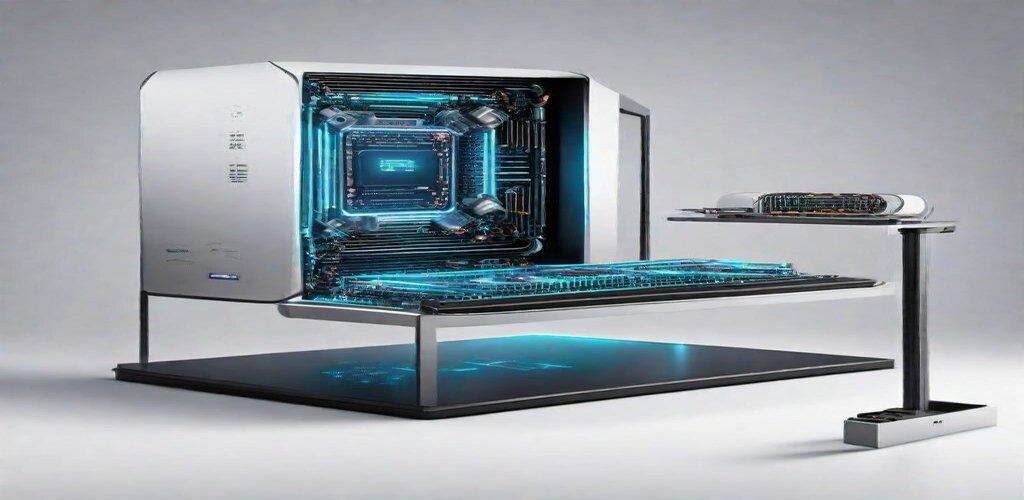
Singapore-based Horizon Quantum Computing achieved a historic milestone on December 4, 2025, becoming the first private company to successfully deploy and operate a quantum computer for commercial use in the city-state. The achievement positions Singapore at the forefront of quantum technology in Southeast Asia and represents a significant step toward making quantum computing accessible for real-world business applications.
The announcement was made at a press conference in Singapore attended by Minister for Trade and Industry Gan Kim Yong, who hailed the development as “a testament to Singapore’s commitment to becoming a global hub for cutting-edge technology and innovation.”
About Horizon Quantum Computing
Founded in 2018 by Dr. Joe Fitzsimons, a renowned quantum physicist who previously worked at the Centre for Quantum Technologies at the National University of Singapore, Horizon Quantum Computing has focused on making quantum computing more accessible to software developers who lack deep quantum physics expertise.
The company’s unique approach involves developing software tools that automatically translate conventional programming code into quantum instructions, dramatically lowering the barrier to entry for businesses wanting to leverage quantum advantages.
“Most companies don’t have quantum physicists on staff,” Dr. Fitzsimons explained. “Our mission has always been to bridge the gap between classical programming and quantum computing, and having our own quantum hardware operational is a crucial step toward that goal.”
Technical Specifications
While Horizon has not disclosed all technical details citing competitive concerns, the company revealed several key specifications of their quantum system:
- Qubit Count: 64 superconducting qubits
- Quantum Volume: 256 (a holistic measure of quantum computer performance)
- Coherence Time: Up to 150 microseconds
- Gate Fidelity: 99.7% for single-qubit gates, 99.3% for two-qubit gates
- Operating Temperature: 15 millikelvin (requires cryogenic cooling)
- Error Correction: Implements surface code error correction
Dr. Simon Devitt, Principal Quantum Architect at Horizon, noted that while these specifications don’t match the largest quantum systems from IBM or Google, they’re specifically optimized for commercial optimization problems rather than pure quantum supremacy demonstrations.
Commercial Applications
The quantum computer is now available for commercial clients through Horizon’s cloud platform, with initial focus on three key application areas:
1. Financial Portfolio Optimization
Singapore’s financial services sector has shown particular interest. DBS Bank, one of Asia’s largest banks, is already a beta customer. Dr. David Gledhill, DBS’s Group Chief Information Officer, stated: “Portfolio optimization is a perfect use case for quantum computing. Problems that would take our classical computers days to solve optimally can potentially be solved in hours on quantum systems.”
The quantum system can analyze thousands of interdependent variables in investment portfolios simultaneously, considering correlations, risk factors, and regulatory constraints in ways classical computers struggle with.
2. Drug Discovery and Molecular Simulation
Pharmaceutical companies are exploring quantum computing for simulating molecular interactions. Tata Consultancy Services, which has a significant presence in Singapore, has signed a partnership to use Horizon’s quantum system for drug discovery research.
Quantum computers can model electron interactions in molecules with a level of accuracy impossible for classical computers, potentially accelerating the discovery of new medications and materials.
3. Supply Chain and Logistics Optimization
Given Singapore’s position as a global logistics hub, optimizing shipping routes, warehouse operations, and supply chain flows represents a major commercial opportunity. PSA International, one of the world’s largest port operators, is evaluating quantum solutions for container yard optimization.
Singapore’s Quantum Strategy
Horizon’s achievement is part of Singapore’s broader national quantum strategy. The government has invested over SGD $300 million (approximately USD $225 million) in quantum research and development since 2020 through the National Quantum Strategy.
Key elements of Singapore’s quantum initiative include:
- Research Excellence: The Centre for Quantum Technologies has been operating since 2007
- Talent Development: Quantum computing courses now offered at NUS, NTU, and SUTD
- Industry Partnerships: Collaborations with IBM, Google, and now Horizon
- Startup Ecosystem: Government grants for quantum startups through SGInnovate
- International Collaboration: Partnerships with quantum research centers in the US, EU, and China
Professor Artur Ekert, Director of the Centre for Quantum Technologies, emphasized Singapore’s unique position: “Singapore combines strong academic research, government support, and a business-friendly environment. This makes it an ideal location for commercializing quantum technology.”
Access and Pricing
Starting in January 2026, enterprises can access Horizon’s quantum computer through a cloud-based platform. The company is offering several access tiers:
- Research Access: Free for academic institutions (limited hours)
- Startup Tier: SGD $5,000/month for 20 hours of quantum time
- Enterprise Tier: SGD $25,000/month for 100 hours plus priority support
- Dedicated Access: Custom pricing for organizations requiring exclusive access
These prices are competitive with IBM Quantum and Amazon Braket, but Horizon emphasizes that their software tools reduce the expertise required, potentially lowering total cost of ownership.
Regional Impact
Horizon’s success has implications beyond Singapore. Several Southeast Asian countries are watching closely and developing their own quantum strategies:
Malaysia announced a RM 500 million quantum initiative in November 2025.
Thailand is establishing a quantum computing center at Chulalongkorn University.
Vietnam has signed memorandums of understanding with quantum research institutes in Europe and the US.
Dr. Fitzsimons sees this regional interest as positive: “Quantum computing is too big for any one company or country. Regional collaboration will accelerate progress for everyone.”
Challenges Ahead
Despite the milestone, significant challenges remain. Quantum computers are still highly specialized tools, not general-purpose replacements for classical computers. They excel at specific problem types but struggle with many common computing tasks.
Key challenges include:
- Error Rates: Even with 99.7% gate fidelity, errors accumulate in long calculations
- Limited Qubits: 64 qubits isn’t enough for all target applications
- Cooling Requirements: Cryogenic systems are expensive and complex to maintain
- Talent Shortage: Finding employees who understand both quantum physics and business problems
- Algorithm Development: Many quantum algorithms are still theoretical
Horizon is transparent about these limitations. “We’re not claiming quantum computers will replace your laptop,” Dr. Fitzsimons said. “But for specific optimization and simulation problems, they offer advantages that will only grow as the technology matures.”
Future Roadmap
Horizon has announced an ambitious roadmap for the next three years:
- 2026 Q2: Upgrade to 128 qubits
- 2026 Q4: Launch quantum-classical hybrid algorithms
- 2027 Q2: Achieve quantum error correction at scale
- 2027 Q4: Demonstrate “quantum utility” – solving real business problems better than any classical computer
- 2028: Target 1,000 logical qubits after error correction
The company also plans to expand beyond Singapore, with potential quantum systems in Europe and North America by 2027.
Investment and Funding
Horizon has raised SGD $50 million to date from investors including Sequoia Capital Southeast Asia, SGInnovate, and Amadeus Capital Partners. The company is currently raising a Series B round of SGD $100 million to fund hardware expansion and software development.
Conclusion
Horizon Quantum Computing’s achievement represents more than a technological milestone – it signals the transition of quantum computing from research curiosity to commercial tool. While widespread quantum computing remains years away, Singapore has positioned itself at the forefront of this transformation.
As Minister Gan stated at the launch: “Today, we’re not just talking about the future of computing. We’re building it, right here in Singapore.”