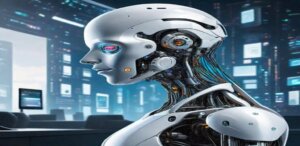
Quantum computing has reached a critical inflection point in 2025, with commercial systems now available and breakthrough technologies like room-temperature quantum devices emerging. Here’s what you need to know about this revolutionary technology.
Understanding Quantum Computing
Unlike classical computers that use bits (0 or 1), quantum computers use qubits that can exist in multiple states simultaneously through superposition. This allows quantum computers to solve certain problems exponentially faster than traditional computers.
Recent Breakthroughs in 2025
Room-Temperature Quantum Devices
Stanford researchers achieved a major milestone by developing quantum communication devices that operate at room temperature, eliminating the need for expensive cryogenic cooling systems.
Commercial Quantum Systems
Singapore’s Horizon Quantum Computing launched the first commercial quantum computer in Southeast Asia, making the technology accessible to enterprise clients.
Practical Applications Today
- Drug Discovery: Simulating molecular interactions for pharmaceutical development
- Financial Modeling: Portfolio optimization and risk analysis
- Cryptography: Developing quantum-resistant encryption methods
- Supply Chain: Complex logistics optimization
- Materials Science: Discovering new materials with specific properties
How to Get Started with Quantum Computing
1. Learn the Fundamentals
Start with online courses from IBM, Microsoft, or universities. No physics PhD required – focus on quantum algorithms and applications.
2. Use Cloud-Based Quantum Computers
IBM Quantum, Amazon Braket, and Azure Quantum offer cloud access to real quantum hardware for experimentation.
3. Experiment with Quantum Simulators
Tools like Qiskit (IBM) and Cirq (Google) let you simulate quantum circuits on classical computers.
What to Expect in 2026
Industry experts predict quantum computers will achieve “quantum advantage” in more domains, solving practical problems faster than any classical supercomputer. However, fully fault-tolerant quantum computers suitable for widespread use are still 5-10 years away.
Even experienced practitioners encounter obstacles. Understanding common challenges and their solutions helps you overcome hurdles more quickly.
Deepening your knowledge requires accessing quality educational resources and staying connected with the community.
Technology and best practices evolve rapidly. Maintaining relevance requires ongoing learning and adaptation.